
Name it.
What you're feeling has a name. Not stress, not laziness, not early dementia. Perimenopause.

You're not crazy.
Your symptoms aren't random.
Free · 3 minutes · Results by email
Built by Dr. Richard Perrin, a double board-certified neurosurgeon, in both Canada and the United States.
You used to be the one who had it handled. Now the word disappears mid-sentence, in the meeting you're running. You reread the same email three times. You're wide awake at 3:17 a.m., running through tomorrow's list, then dragging through the afternoon. Anxiety showed up out of nowhere, and your patience is gone.
You've tried to explain it to your doctor, your partner, and yourself. The tests come back fine. Maybe you've quietly wondered whether something is wrong with your brain.
These are not random. They are connected. And they have a name.
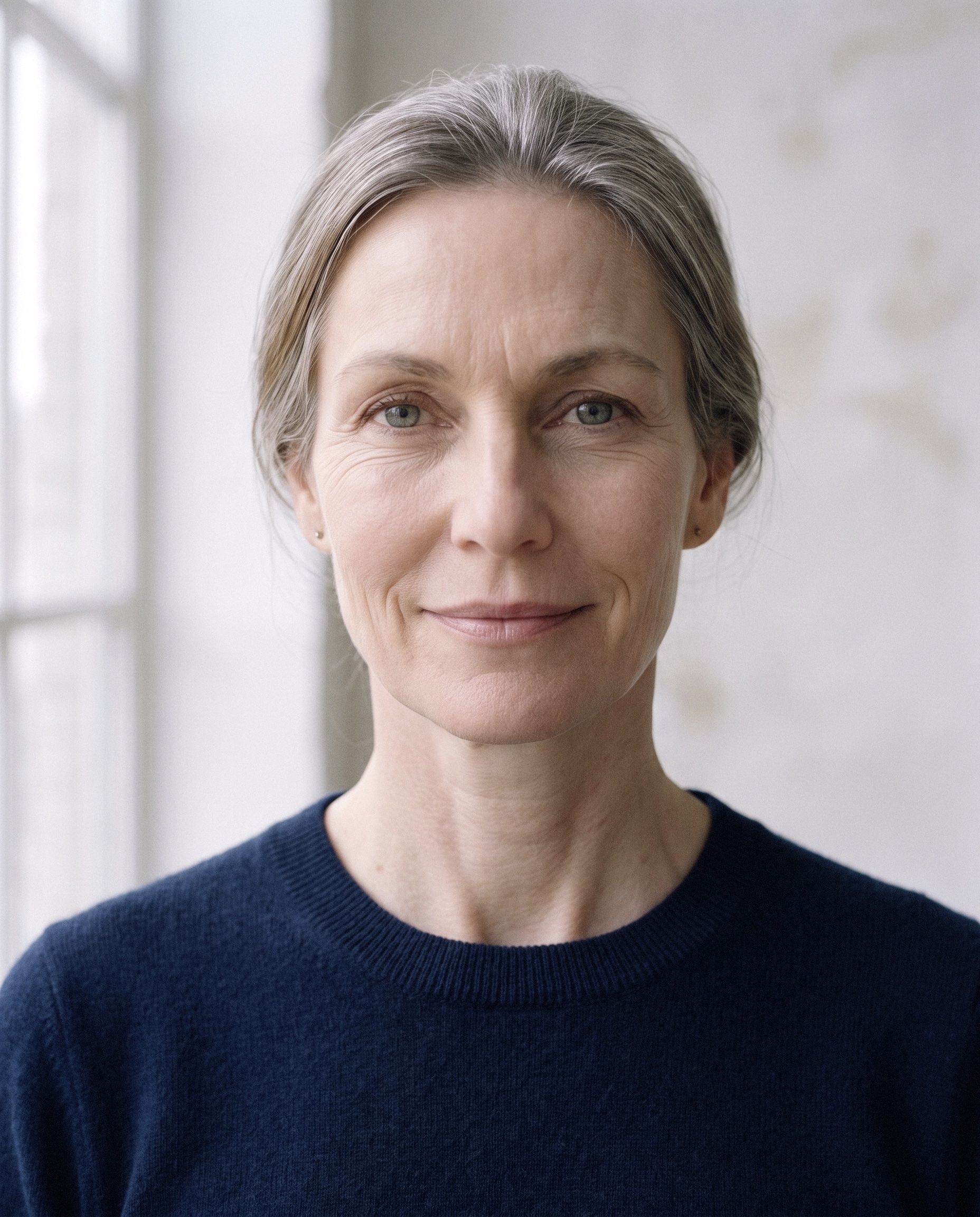 Illustrative image, created with AI
It isn't a lack of effort. Most midlife advice hands every woman the same list: sleep more, stress less, eat clean, exercise, take this supplement. You tried the list. Some of it helped for a week.
The list isn't wrong. The order is missing. A woman who can't sleep and a woman whose joints ache don't start in the same place.
It's not just which levers you pull. It's the order you pull them in.
What you're feeling has a name. Not stress, not laziness, not early dementia. Perimenopause.
Your symptoms form one connected system, and one archetype is loudest right now. The free assessment finds it.
Before you build a plan, rule out the look-alikes with your own doctor: thyroid, iron, vitamin D, blood sugar, and for some women, sleep apnea.
Your archetype sets which step comes first, and what to leave alone for now.
Start with the first step. Add the next one when the first runs without thinking. Every three to four months, take the assessment again.
Most women recognize one archetype first, with some overlap. The assessment sorts out which one is loudest. Hot flashes and night sweats can come with any of the five.
Exhausted, but unable to switch off.
Your body is done, but your mind is still moving. Sleep comes in fragments, and morning never feels like a reset.
You know the word is there. It just will not come.
Familiar tasks take more effort, and the sharpness you counted on feels harder to reach.
The things that used to light you up barely register.
You are functioning, but the spark (motivation, pleasure, desire) feels quieter than it used to.
You are doing what used to work, and your body has stopped responding.
Weight shifts, recovery slows, and the old rules no longer seem to apply.
Your body feels less resilient than it used to.
More aches. Less recovery. Changes in your skin or hair that are easy to dismiss, but hard not to notice.
The Elura Vitality Assessment™ is a free questionnaire designed by a physician. You'll get:
Free · 3 minutes · Education, not medical advice
Take the assessment Illustrative image, created with AI
 Illustrative image, created with AI
The Elura app holds your sequence in order, a daily check-in, and a summary you can take to your doctor.
Get the Elura app →Free to download · iPhone
Clarity Reset, Private Coaching: four weeks, one-on-one with Dr. Perrin. Your first step tested in your real week, and personal written feedback every week.
About the Clarity Reset →My wife Cecily is an ER physician. The sharpest person in any room. Then the migraines began, then the brain fog, then the fatigue. It was the height of the pandemic, so we blamed stress. She eventually left her job in the ER, certain it was the cause. The symptoms stayed.
Two physicians, and we couldn't figure it out. When I finally said the word, perimenopause, she started treatment with her doctor and slowly felt like herself again.
If we missed it, what chance does anyone else have? Perimenopause falls between specialties. No one owns it. That's why no one could explain it.
I'm a double board-certified neurosurgeon, in both Canada and the United States. I built Elura so no woman has to piece this together alone.
Richard Perrin, MD · Founder, Elura

Perimenopause is the transition before menopause, when estrogen and progesterone rise and fall unpredictably. It often starts in the 40s, sometimes in the late 30s, and usually lasts several years. Menopause is confirmed after 12 months without a period.
Estrogen acts throughout the brain, including the areas that manage memory, focus, mood, sleep, and body temperature. Researchers describe perimenopause as a neurological transition, which is why so many of its hardest symptoms (brain fog, anxiety, 3 a.m. waking, hot flashes) are felt in the brain.
Memory lapses and word-finding trouble are common in perimenopause, and they generally don't signal dementia. In the SWAN study, women didn't get worse at memory tests during perimenopause. They stopped getting better at them, and the improvement returned after menopause. New or worsening memory problems should still be checked by your doctor.
Hormone levels swing widely from day to day, so a single blood test is a snapshot of a moving target. UK national guidelines (NICE) say perimenopause in women over 45 can be identified from symptoms and cycle changes, without lab tests.
Hormone therapy is the most effective treatment for hot flashes and night sweats. Symptoms like brain fog are linked to several things at once (shifting estrogen, hot flashes, sleep, and mood), so estrogen may not address everything on its own. Knowing your archetype helps you and your doctor decide what to look at next.
Yes. Estrogen and progesterone influence the brain chemicals that regulate mood and stress. When those hormones become erratic, new anxiety, irritability, and sudden anger are common. Perimenopause also raises the risk of depression. If mood symptoms are severe, talk to your doctor promptly. If you have thoughts of harming yourself, call or text 988.
Night sweats are one of the most common causes. Falling progesterone also plays a part: one of its byproducts acts on GABA, the brain's main calming system, so the lightest hours of sleep break more easily. Once you're awake, an alert nervous system keeps you there. Sleep apnea also becomes more common in midlife and is worth asking about.
Because so many of perimenopause's hardest symptoms are felt in the brain. The pituitary gland, which runs the body's hormone system, sits beneath the brain, and neurosurgeons operate on it. Dr. Richard Perrin is a double board-certified neurosurgeon, in both Canada and the United States.
No. Elura is education, not medical care. We don't diagnose, prescribe, or interpret your labs. We help you understand your archetype and what to focus on first, so you get more out of your own doctor, whether or not you use hormone therapy.
Yes. It takes about three minutes, needs no credit card, and your results arrive by email.
Written by Richard Perrin, MD, double board-certified neurosurgeon · Last updated September 2026
"Perimenopause falls between specialties.
No one owns it. That's why no one could explain it."
Dr. Richard Perrin
Questions? Email info@elura.co. A real person reads every message.